N°01
MAXER
Logical reasoning through CSD/CAD comparison, causal chain and disparities to pinpoint the exact cause of a breakdown.
A structured troubleshooting and reliability method. A rigorous framework inspired by MAXER, TPM and 8D to structure every intervention and durably eliminate root causes.
ACTION-LEARNING PROGRAM ALM-DF01 · 7 MODULES + COACHING · QUALIOPI · OPCO-ELIGIBLE

Structured diagnosis: the rigour of the method, knowledge passed on through the team.
When you choose not to take the time to analyse breakdowns, you choose to take the time to suffer them.
The cheapest breakdown is the one that never happens.
01 — THREE PILLARS
DIAGFIAB© was born from the convergence of three complementary approaches, proven over decades in industry. Together, they cover the full spectrum: from rapid diagnosis to lasting reliability improvement.
N°01
Logical reasoning through CSD/CAD comparison, causal chain and disparities to pinpoint the exact cause of a breakdown.
N°02
Total Productive Maintenance — bringing operators and maintenance together to detect, understand and act.
N°03
A structured problem-solving approach in 8 disciplines, from the initial finding to preventing recurrence.
02 — THE PROGRAM
A rigorous learning progression, from understanding how a breakdown works through to implementing reliability solutions. Each module builds on the previous ones.
01
Understanding the reasoning to apply when facing a malfunction.
Information gathering, comparative analysis, a participative approach and the use of visual tools. Participants learn to ask the right questions before looking for the right answers.
Historical source. The comparative analysis method taught here builds on the work of Charles Kepner and Benjamin Tregoe (1950s), pioneers of structured problem-solving by facts rather than intuition. Learn more →
02
From Toyota to modern industry: understanding the foundations.
The history of the method, key concepts and its place within the wider effort to improve industrial performance. Serious breakdowns often grow from small anomalies that were ignored — treat only the symptom and they come back. Look for the root cause and they disappear.
03
Defining, describing and categorising with a common language.
What a breakdown is, its origin, its nature and the vocabulary to use to describe it. Understanding the fundamental difference between forced degradation (operating conditions, human error, maintenance defects) and natural degradation (normal wear).
04
The 5W2H form: describing precisely the configuration with and without the defect.
The F1 form structures the description of the problem along two axes: the configuration with defect (CAD) — what does not work — and the configuration without defect (CSD) — what does work. This systematic comparison is the key to locating the failing chain and avoiding approximate diagnoses.
05
Working back from the symptom to the root cause through logical reasoning.
The F2 form makes it possible to build the complete causal chain: from the observed symptom through to the antecedent at the origin of the breakdown, passing through the direct cause and the root cause. The timeline and the disparities guide the reasoning to avoid logical leaps and false leads.
06
Choosing and implementing the right corrective and preventive actions.
Identifying the types of maintenance solution — palliative, curative and mitigating. Using the selection matrix to choose the most relevant actions. Addressing root causes arising from human error with the HERCA method. Updating the preventive maintenance plan, operating procedures, visual standards and spare-parts stock.
07
Facilitating a working group and launching field projects.
Principles for facilitating a working group, selecting the problems to address (plant cases) and scheduling the individual coaching sessions. Each participant leaves with a concrete work plan and a follow-up schedule.
03 — ACTION-LEARNING
DIAGFIAB© is not a conventional theoretical course. Each participant chooses a real reliability topic to address in their plant, receives individual support from an expert coach, and presents their project at the end of the course as a final presentation before their company. Immediate transfer of skills, measurable results by the time the training ends.
Day 1 & 2
Theory, immersive exercises (bathroom, forge furnace, ERCA filler, Banbury mixer, TETRA UHT) and hands-on practice with the F1, F2, F3 forms. 6 to 12 participants.
Week 2 — 8
Each participant applies the method to a piece of equipment chosen by the management committee. Periodic remote follow-up with the expert coach to clear blockers and validate the approach.
Final presentation
Each participant presents their breakdown analysis and reliability solutions before their company. Final assessment and award of the DIAGFIAB© qualification certificate.
04 — AUDIENCE
Every profile involved in the maintenance and reliability of industrial equipment, from the workshop to management.
05 — KEY FACTORS
Plants that use DIAGFIAB© rigorously and systematically achieve better results than those that use it little or not at all. Here is what we observe on the deployments that last over time.
01
Ask the right questions at every complex breakdown diagnosis.
02
Record machine history properly in the CMMS — insist on data quality. Consult the operator to capture their account.
03
Set up a ritual: define internal rules on when the method is used (breakdowns > 4h, critical machine, bottleneck…).
04
Appoint a “DIAGFIAB© champion” in the plant. Train as many people as possible.
05
Work as a team. A causal chain is never built alone.
06
Never give up. The method is no magic wand, but rigour always pays off.
07
Be innovative in how you use it (open sharing, communication, contests, varied problems) without forgetting the fundamentals.
06 — AT THE ROOTS
DIAGFIAB© did not come out of thin air. The method draws on three reference works that shaped Pascal Flatrès’ thinking over 30 years of field experience in factories: the MAXER method (learned at Michelin in 1989) for structured diagnosis, the rational thinking of Kepner-Tregoe for comparative analysis, and TPM applied to the process industries for collective reliability improvement.
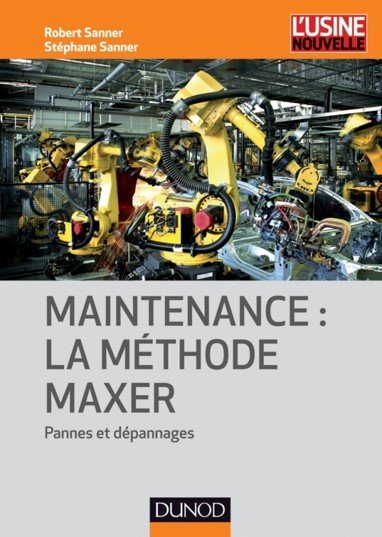
The MAXER method structures the diagnosis of industrial failures from the causal chain. Pascal Flatrès was trained in it in 1989 at Michelin, then certified as an instructor. It is the foundation of diagnosis in DIAGFIAB©.
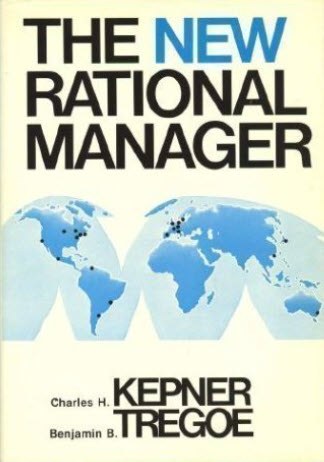
Pioneers of structured problem-solving (1950s), Kepner and Tregoe formalised the comparative analysis that guides reasoning by facts rather than intuition. Adopted worldwide in industry, IT and engineering. It is the logical backbone of module 1 of DIAGFIAB©.
Official Kepner-Tregoe FAQ →
The definitive reference for applying Total Productive Maintenance to the process industries (food processing, chemicals, metallurgy, paper). Tokutaro Suzuki, former JIPM executive, formalises the 8 pillars of TPM and collective reliability improvement by production teams. It is the direct inspiration for the participative and reliability dimension of DIAGFIAB©.
07 — TAKE ACTION
An action-learning program on an in-house or inter-company basis. Each participant leaves with a concrete reliability project, supported by an expert coach.
08 — YOUR CONTACTS
Industrial maintenance expert — DIAGFIAB© trainer
30 years of field experience in factories. Founder of ALM. Trained in MAXER at Michelin in 1989, certified instructor.