01
LEVEL 1 · DISCOVERY
45 MIN · REMOTE · FREE
Pascal shows you a case already handled.
You see the service in action on a typical piece of equipment. You decide afterwards.
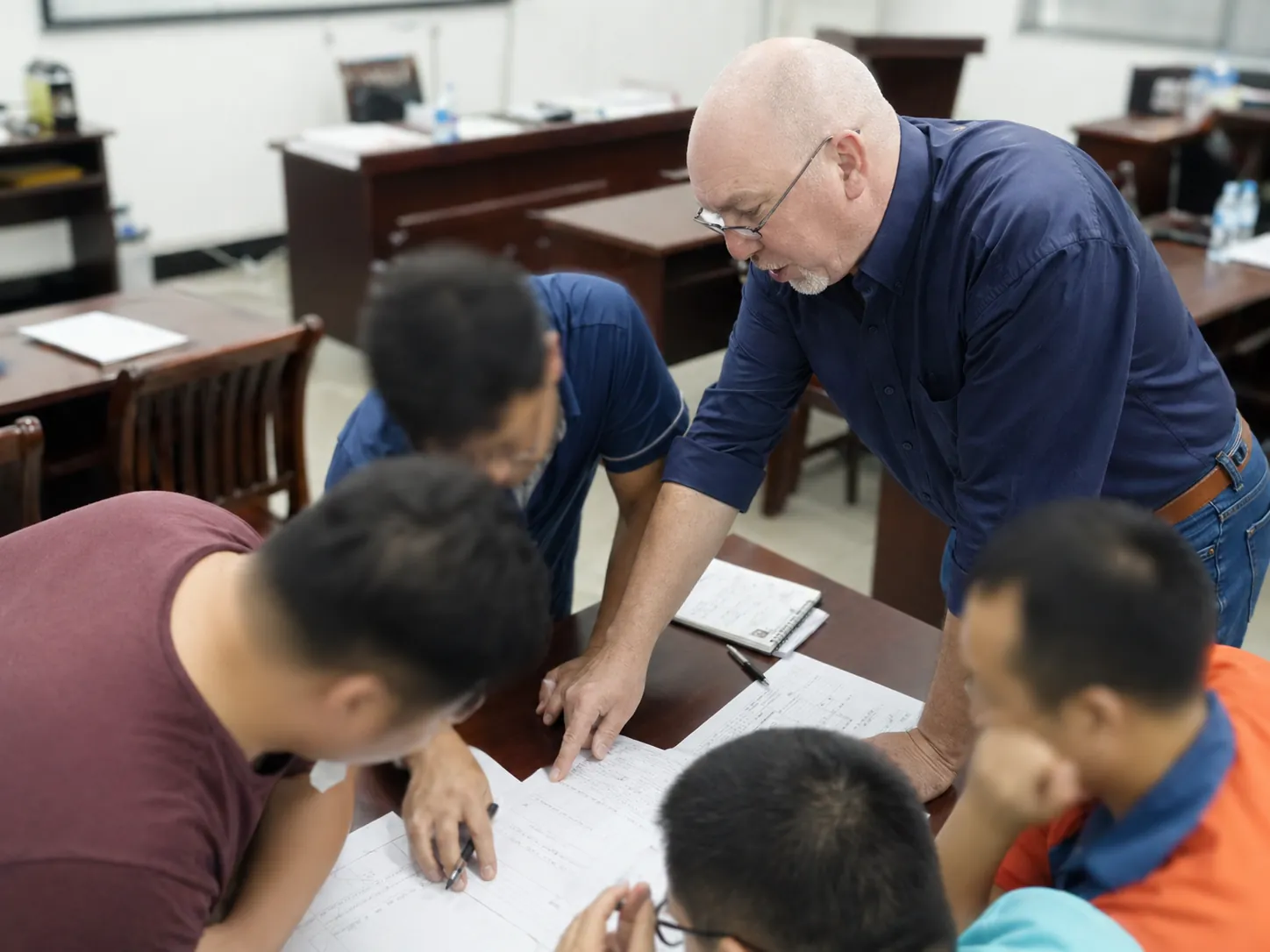
30 YEARS IN FACTORIES · INDUSTRIAL MAINTENANCE
Industrial maintenance consulting for large groups and SMEs. Food processing, metallurgy, automotive. CARE method, MaintAI©, DIAGFIAB©, RCM, Planning & Scheduling.
TRUSTED BY















Scroll to see all our clients →

01 — FLAGSHIP SERVICE
MaintAI© is not software. It's a consulting service. Pascal Flatrès brings his proprietary AI and 30 years of field experience in factories. You pick a piece of equipment. We produce an operational maintenance plan, written for THAT specific equipment. Not a POC, not a demo: a deliverable.
LEVEL 1 · DISCOVERY
45 MIN · REMOTE · FREE
You see the service in action on a typical piece of equipment. You decide afterwards.
LEVEL 2 · TRIAL RUN
ON SITE · ON QUOTE
You choose the equipment. Site visit, training, collection of existing documentation, discussions with your experts, run through the model, validation. You leave with a maintenance plan optimised for your case.
02 — EXPERTISE
CATALOGUE · 2026 · ALM
Generation of preventive and predictive maintenance plans. Consulting service augmented by ALM's proprietary AI. Operational, based on RCM, TPM and RCA, with procedure writing. Delivery of data ready to import directly into the CMMS.
See the full page →Complete diagnostic of the industrial maintenance activity, across four axes:
Reliability approach: Target, Analyse, Redesign, Execute. A structured 4-step approach to durably improve the reliability of critical equipment. Breakdown reduction of 30 to 50% over 6 months.
See the full page →Preparation and scheduling of maintenance work. Maximising technicians' wrench time. Methodology built on 30 years of multi-site field experience in factories.
See the full page →A structured fault-diagnosis and reliability method, based on best practices from methods such as MAXER, RCA and 8D. A 7-module action-training for accurate fault diagnosis. Durable reliability of industrial equipment.
See the full page →03 — RESULTS
Three orders of magnitude we find on most reliability projects. Exact per-client figures are shared in a meeting.
Specific client cases (real figures, scopes, sectors) are shared in a meeting. NDAs respected.
Discover MaintAI©, 45 min04 — KEY POINTS
The fundamental difference between TPM and RCM lies in their objectives. TPM (Total Productive Maintenance) aims to improve overall equipment productivity by involving all employees. RCM (Reliability Centered Maintenance) focuses on the reliability and integrity of machines, selecting for each failure mode the most relevant maintenance strategy.
The two approaches are complementary: TPM organises and engages the teams, RCM technically optimises the content of the maintenance plan equipment by equipment. At ALM, we combine both in our reliability projects.
They're often confused — wrongly. FMEA is a descriptive tool: it describes how a piece of equipment can fail (failure modes, effects, criticality). RCM is a decision-making method: for each critical function, it chooses the most relevant maintenance strategy — predictive, preventive, or deliberate run-to-fail.
Pascal Flatrès was trained in RCM in the United States in 1997, on the ground, with technicians who had been applying it for years. In 30 years, he has rarely seen an industrial FMEA carried through to the end: too many hours lost debating ratings to the decimal, and the heart of the approach — the proposed preventive measures — sacrificed for lack of time.
What we see too often: an FMEA carried out by the methods department without the field technicians, failure modes identified « in a back office » without relying on the real breakdown history, an analysis focused on rating rather than on the maintenance strategy to adopt.
What RCM changes: it is built with the technicians and line operators, anchored in the real breakdown history, and leads to a chosen strategy — not a default task list. It integrates modern predictive maintenance 4.0 tools (vibration, IR, US, oils…) to choose the most economical solution. With RCM 4.0, these analyses become dynamic: IoT devices feed the servers for real-time decisions — a static framework turns into a self-learning system.
That's why MaintAI© is anchored in RCM, not in FMEA. Read the original LinkedIn post →
More questions? Ask them directly →
05 — ABOUT
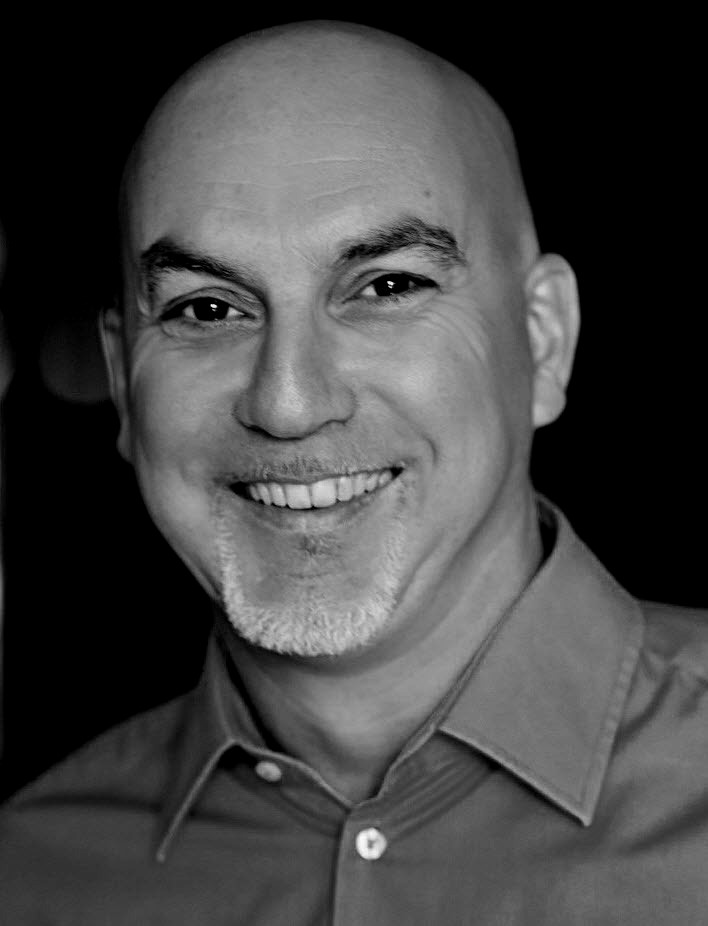
Pascal Flatrès, 59, founder of ALM. Operational excellence applied to industrial maintenance.
Internal promotion at Michelin (mechanical engineering degree, IUT Rennes). 30 years of field experience in factories — food processing, metallurgy, automotive. Maintenance department head, continuous-improvement manager, technical director, industrial management. France, Poland, United States. Trained in RCM in the United States in 1997, on the ground.
Today an independent consultant. Partner of SpinPart since 2017 — their digital and AI expertise combined with my hands-on maintenance background.
06 — TAKE ACTION
Remote, 45 minutes, free. I show you a case already handled — a typical industrial piece of equipment — and you see exactly what MaintAI© produces as a deliverable. No preparation on your side, no commitment.
For a demonstration on your own data, we move to the Trial run : on site, where we work on the equipment of your choice with your existing documentation.